
Login
Welcome back! Login with your phone number.
By continuing, you agree to our Terms & Privacy Policy.
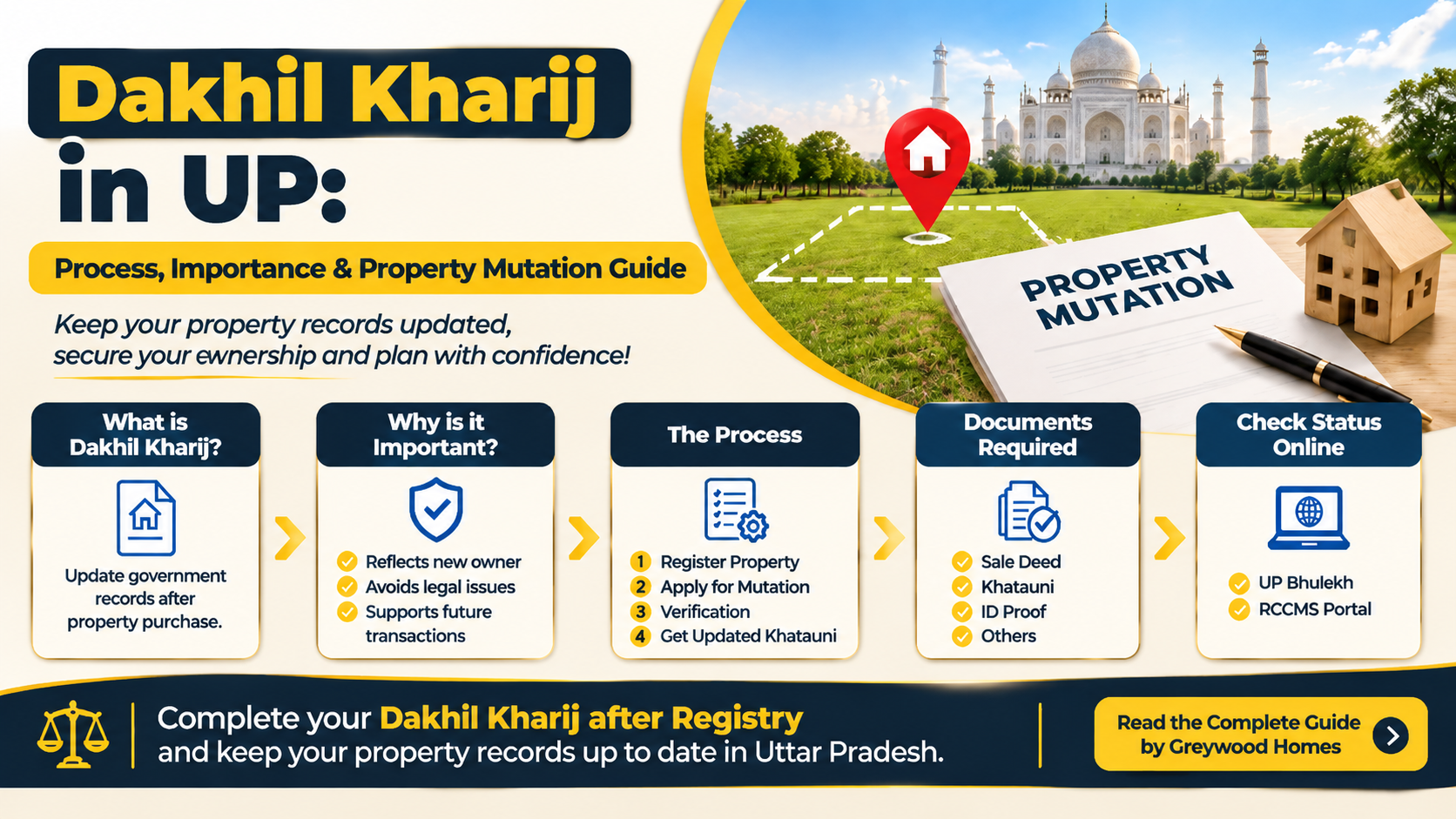
Dakhil Kharij in UP: Process, Importance & Property Mutation Guide
Buying a property is an important financial decision, but the process does not end with signing the sale deed or completing the property registry. After purchasing land or property in Uttar Pradesh, buyers should also ensure that the ownership change is reflected in the relevant government records. This process is commonly known as Dakhil Kharij (दाखिल खारिज) or property mutation.
Understanding Dakhil Kharij in UP is important for anyone purchasing agricultural land, residential plots, or other properties. It helps update the relevant land or property records with the new owner's details and reduces the chances of future administrative complications.
Whether you are buying property in Agra, Mathura, Vrindavan, or another part of Uttar Pradesh, this guide explains the meaning, process, importance, documents, and key things to know about property mutation after registry.
What Is Dakhil Kharij in Uttar Pradesh?
Dakhil Kharij is the process of updating government land or property records after ownership changes due to a sale, inheritance, gift, or another legally recognised transfer.
In simple terms, when a person purchases land, the previous owner's name may continue to appear in the existing revenue records until the mutation process is completed. Through Dakhil Kharij, the relevant authority updates the records to reflect the new owner's details.
In Uttar Pradesh, agricultural land mutation is primarily governed by the Uttar Pradesh Revenue Code, 2006.
The process involves the relevant revenue authorities, including the Tehsildar and Revenue Inspector, depending on the nature of the case.
Dakhil Kharij is also commonly referred to as:
Why Is Dakhil Kharij Important After Buying Property?
Completing the property registry is an important step, but buyers should also ensure that the relevant ownership records are updated.
Here are some reasons why Dakhil Kharij After Registry matters.
1. Updating Government Land Records
One of the main purposes of mutation is to update the relevant government records with the new owner's details.
For agricultural land in Uttar Pradesh, the updated information is reflected in the applicable revenue records, including the Khatauni.
2. Maintaining Updated Ownership Records
Property mutation helps maintain updated administrative records and creates a documented record of the reported ownership change.
This can be useful when dealing with revenue authorities and other government departments.
3. Reducing Future Administrative Complications
If the previous owner's name continues to appear in the records, the buyer may face difficulties while applying for certain land-related services or completing subsequent administrative procedures.
Completing mutation helps reduce such record-related confusion.
4. Supporting Future Property Transactions
Updated property records can make future transactions and verification processes more organised.
If you plan to sell, transfer, or otherwise deal with the property in the future, having updated records can be helpful.
5. Property-Related Revenue and Tax Records
For agricultural land, mutation can help the revenue administration maintain updated records relevant to land revenue.
For urban properties, municipal property tax records may require a separate name transfer or mutation process.
Dakhil Kharij After Registry: Understanding the Process
Many buyers assume that property registration automatically completes every ownership-related formalities. However, registration and mutation are separate administrative processes.
Under Sections 34 and 35 of the Uttar Pradesh Revenue Code, 2006, the transfer of land is reported to the concerned Tahsildar, and the mutation process is carried out according to the prescribed procedure.
Here is a general overview of the process.
Step 1: Complete the Property Registry
The first step is to complete the property transaction through a registered sale deed or another applicable transfer document.
Keep a copy of the registered deed and supporting documents safely.
Step 2: Report the Property Transfer
For agricultural land covered by the Uttar Pradesh Revenue Code, the transfer is required to be reported to the Tahsildar of the concerned Tehsil in accordance with Section 34.
The registration authority may also send transfer information to the revenue administration under the applicable provisions.
Step 3: Mutation Case Registration
The relevant mutation case is processed by the revenue authorities based on the registered transfer information or an application submitted through the prescribed procedure.
Keep the case number or application reference for future status checks.
Step 4: Verification by Revenue Authorities
The concerned revenue officials may verify the transaction, property details, and relevant land records.
Depending on the case, the Revenue Inspector or Lekhpal may be involved in the verification process.
Step 5: Notice and Objection Process
The Tahsildar follows the prescribed proclamation and inquiry procedure.
If another person raises an objection regarding the transfer, the matter may require further examination and a decision by the competent authority.
Step 6: Mutation Order
If the case is not disputed and the required conditions are satisfied, the Tahsildar may direct the relevant revenue records to be amended.
For disputed cases, the matter is dealt with according to the applicable legal procedure.
Step 7: Updated Khatauni Records
After the mutation order is passed and processed, the updated ownership entry should be reflected in the relevant revenue records.
Buyers should check the updated Khatauni and retain the mutation order and other relevant documents.
At Greywood Homes, we believe that a well-informed property decision begins with proper documentation, legal verification, and awareness of every important step involved in buying real estate.
Make your next property purchase with confidence by understanding the process before you invest.
Answers to common questions related to this topic.
Greywood Homes is a property expert sharing insights about the real estate market.
Rental agreement in UP explained: rules, documents, stamp duty, registration, tenant verification an...
Pradhan Mantri Awas Yojana Urban 2.0 (PMAY-U 2.0) aims to provide affordable housing, rental housing...