
Login
Welcome back! Login with your phone number.
By continuing, you agree to our Terms & Privacy Policy.
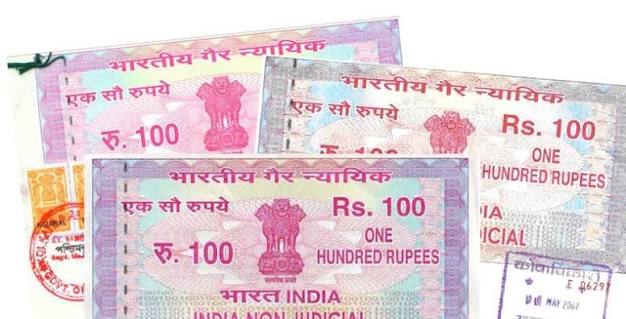
Now that you've selected a place you like, figured out a price, and gathered your funds, the topic of the registry will inevitably come up. This guide answers common questions about property registration in uttar predesh, including costs and document requirements.
Buying a home in the uttar pradesh or a plot in a town is similar, and in this guide, I'll go through the registry process step-by-step from the initial documentation to the end, when you hold the registered deed in 2026 in UP.
Once a property is registered, you officially own the property. This is a very important step, and if it is not done properly, it can cause a number of issues. If it is not done properly, the seller retains the right to sell it to somebody else, or the government can seize it for failure to pay taxes. It is for this reason that it is vital to be certain it is registered. The SRO will not process it until the deed is fully registered.
Two payments are involved, and people often mix them up:
Let's start with the part everyone wants to know. Stamp duty in Uttar Pradesh is calculated on the market value or the circle rate, whichever is higher. The circle rate is the minimum value the District Magistrate has fixed for your locality, so declaring a lower price won't reduce your duty.
|
Buyer type |
Stamp duty |
|
Male buyer |
7% |
|
Sole female buyer (property up to ₹1 crore) |
6% |
|
Joint male and female buyers |
6.5%* |
|
Joint female and female buyers |
6%* |
|
Transfer between blood relatives (gift deed) |
Flat ₹5,000 plus ₹1,000 processing fee* |
On top of this, the registration fee for an ordinary sale is 1% of the property value.
*Concessions and caps change from time to time. Please confirm these on the official stamp duty calculator before you pay.
Women get a 1% concession on stamp duty, which brings the rate from 7% down to 6%. In 2025, the UP cabinet extended this benefit from properties up to ₹10 lakh to properties up to ₹1 crore. The 6% rate already includes this concession, so it is not an extra rebate on top of 6%.
Here is a simple example for a ₹50 lakh property:
That is a saving of ₹50,000 for the same property.
In India, while considering property registration costs, keep in mind that the amount will vary because there are state-wise variations in stamp duty and registration costs. For the state of Uttar Pradesh, the cost for a male owner would be around 8% (7% + 1%). It would be wise to keep in mind the current rates of each state where the property exists.
One practical point: most home loans cover only the property price. Stamp duty and registration charges usually need to come from your own savings, so plan for them early.
The percentage may look fixed, but the final amount you pay depends on a few things. Knowing them helps you budget better.
The simple takeaway: before you finalise a deal, look up the circle rate for your exact locality on the IGRS UP portal. It tells you the minimum value your stamp duty will be based on.
Every registry amounts to a sale. The transfer of property among parents and children, spouses, siblings, etc., is dealt with entirely differently by Uttar Pradesh from a sale transaction.
The stamp duty for any transfer of property among close-blood relatives is fixed at ₹5,000, along with a registration processing charge of ₹1,000*. Moreover, the registration charges for such transfers are also believed to be capped at ₹20,000*.
To see how big the difference is, take a ₹50 lakh property:
That is a saving of several lakh rupees, which is why families often miss out simply because their documents were drafted as a sale deed by default. If you are transferring property within the family, confirm your eligibility on the IGRS UP portal first, and then have the right type of deed drafted.
*Eligibility conditions, definitions of "blood relative" and caps can change. Please verify on the official portal or with a legal professional before you go ahead.
A missing paper is the most common reason an appointment gets delayed. Use this property registry documents checklist before you head to the SRO:
The good news is that online property registration in UP is much easier than it used to be. The process runs through the official portal of the Stamps and Registration Department, igrsup.gov.in. Here is the land registry process in UP from start to finish.
Besides registration, the portal helps with several things that buyers often need:
It is 7% for male buyers and 6% for sole female buyers on properties up to ₹1 crore. A 1% registration fee is charged on top for ordinary sales.
The registration fee is 1% of the property value for a standard sale deed. Gift deeds between blood relatives are treated separately, so check the portal for current caps.
Yes. You calculate and pay charges and book your slot online on IGRS UP. You still need to visit the Sub-Registrar Office for verification and biometrics.
The percentage rates are the same. What differs is the circle rate used as the base for your area and property type.
It is the minimum property value per square meter notified by the District Magistrate for each locality. Stamp duty is charged on whichever is higher: the circle rate or your actual price.
For a residential purchase, stamp duty and registration charges can be claimed under Section 80C within the ₹1.5 lakh limit if you are under the old tax regime. Please check with your tax adviser.
Registration may feel like paperwork, but it is the important step that makes your ownership official and safe. Always check the title carefully, confirm the circle rate, and keep all your documents ready. Using the portal can save you a lot of time and effort.
At Greywood Homes, we help buyers compare options, understand all the costs involved, and avoid any last-minute surprises—whether you are choosing a plot or a flat. If you are about to sign, reach out to us first. We will guide you through the process with confidence and clarity.
Disclaimer: Rates, concessions and procedures can change. Please confirm the latest figures on the official IGRS UP portal (igrsup.gov.in) or with a legal professional before you register.
Greywood Homes is a property expert sharing insights about the real estate market.
Mathura me Plot Kharidne Se Pehle Kya Dekhein? Learn about legal documents, plot location, land owne...
Learn how to negotiate house prices with proven tips on comparable data, offer tactics, and closing ...
Explore Greywood Homes, the best property marketplace in India — verified listings, zero brokerage...