
Login
Welcome back! Login with your phone number.
By continuing, you agree to our Terms & Privacy Policy.
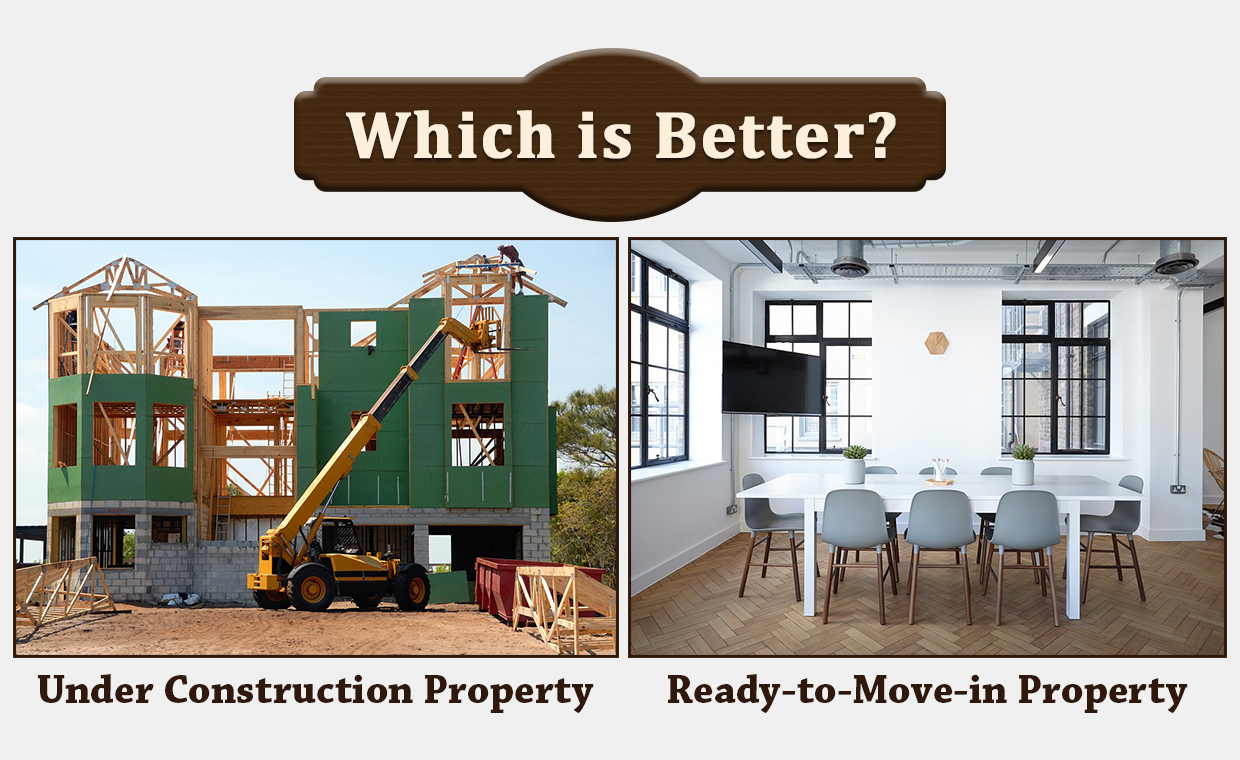
If you have spent any time flat-hunting, you’ve probably hit this exact fork in the road, right? Like, do you take a place you can just walk into next month, or do you book something that’s still a hole in the ground with a glossy brochure? It’s one of the first big questions in any home-buying guide, and honestly, there is no single universal right answer, only the right one for your situation, whatever that means for you.
Let’s sort out what a ready-to-move property actually gives you, what an under-construction place can save you on, and how to decide without constantly worrying it into the ground.
A ready-to-move property is pretty much exactly what it sounds like: the place is done already, it has its occupancy certificate, and you can bring your furniture in pretty soon after the paperwork gets signed. During your site visit, you’re basically seeing what you’ll end up owning, not some hypothetical version of it.
An under-construction property, though, is sold when the building is still in progress—like from the foundation stage right up to the last coat of paint. In that case, you’re choosing it off a floor plan, a sample unit, and a stated handover date. That handover timeline is more of a commitment than a guarantee, and honestly, that's kind of the crux of the comparison.
This is usually the first thing people ask about, and it's a fair place to start. Under-construction homes typically sell for 10-30% less than a comparable finished unit in the same neighbourhood. Builders price early bookings lower because they need the working capital, and buyers who come in at that stage take on the construction risk in exchange for the discount.
Ready-to-move flats cost more, but the premium isn't random — you're paying for a finished product, zero surprises, and the ability to inspect every wall before you commit. For many buyers, that certainty is worth the extra money.
Okay, so here’s the thing that trips up a lot of first-time buyers, you know, right at the start. Under-construction homes usually come with 5% GST, but there’s also no input tax credit, and then this GST gets added right on top of the purchase price. So, say you’re looking at a ₹70 lakh flat; that turns into about ₹3.5 lakh extra, which you might not have had in your budget in the first place.
Now, a ready-to-move flat, once it has its occupancy certificate, is basically exempt from GST in full. Like that, one simple point can actually reduce the price gap between the two choices more than most people assume, so yeah, it’s better to do the math on your side before thinking "under construction" is automatically the cheaper deal.
If you need to move in now — new job, growing family, lease running out — a ready-to-move home is the safer bet. You inspect it, you sign, and you move. No waiting on approvals or construction schedules.
Under-construction homes come with a wait, sometimes a year, sometimes closer to five, depending on how far along the project is. RERA registration has made builders more accountable for timelines, but delays still happen because of funding gaps, labour shortages, or pending approvals. If your living situation can absorb that wait, it's not a dealbreaker—just something to plan around.
This is where the two options really pull apart. With a ready-to-move flat, there's very little left to chance. You walk the actual unit, check the ventilation, test the fittings, and see the neighbourhood exactly as it is—not as a rendering promises it'll be someday.
With under-construction flats, you're trusting a brochure and a builder's track record. The finished unit can differ from the sample flat in small but real ways—tile quality, layout tweaks, and finish standards. This is exactly why builder reputation and RERA compliance matter so much before you sign anything.
One place where under-construction homes pull ahead: flexibility. If you book early enough, you can often influence layout tweaks, choose fittings, or request minor structural changes. That's simply not on the table with a finished building—what's built is built.
If shaping the home to your taste matters to you and you're fine waiting for it, this is a genuine point in favour of buying early.
This one's easy to underestimate until you're living it. Buy under-construction, and there's a real chance you're paying EMI on your home loan while still paying rent where you currently live—two outgoings at once until handover. That dual burden has derailed more than one household budget.
Go with ready-to-move flats, and your EMI simply replaces your rent from day one. No overlap, no double payment. For anyone on a tight monthly budget, this alone can tip the decision.
If you're buying with an eye on returns rather than a place to live, this is where things get interesting. Under-construction homes tend to appreciate faster in percentage terms — prices climb as the project progresses and the surrounding area develops, so early buyers often capture the biggest gains. This is a big reason why under-construction homes attract investors chasing long-term real estate investment growth rather than a place to live in right away.
A ready-to-move home appreciates more slowly since the completed value is already baked into the price, but it has one clear edge: you can rent it out or resell it immediately. There's no lag between buying and earning. If your goal is property investment for steady rental income rather than a long wait for capital gains, that immediacy matters.
Go under-construction if: you can comfortably wait out the build, you want the lower entry price, you're chasing long-term appreciation, or you actually want a say in how your unit turns out.
Go ready-to-move if: you need to move in now, you want zero construction risk, you'd rather see exactly what you're buying, or you can't handle paying rent and EMI at the same time.
Neither is objectively "better" — the ready-to-move vs under-construction decision really just comes down to your timeline, your risk appetite, and how your finances are set up right now. If your primary goal is property investment rather than a place to live yourself, weigh appreciation potential and rental yield above everything else—that's one of the more useful property buying tips out there.
These small checks are the difference between finding the best property to buy for your situation and regretting a rushed decision six months later.
Whichever way you lean, a few property buying tips apply no matter what — consider this your no-nonsense shortlist:
Buying under construction? Confirm RERA registration, check the builder's history of on-time delivery, and get the payment schedule in writing.
Buying ready-to-move? Confirm the occupancy certificate exists, physically inspect the unit and common areas, and talk to a few existing residents if you can.
Either way: verify the title, check pending litigation, if any, and compare at least two or three options before you commit. Don't let a sales pitch replace a site visit.
In the ready-to-move versus under-construction debate, there isn't really one single correct answer, more like the one that fits your life right now. If certainty, speed, and being able to see exactly what you're getting matter most to you, then a ready-to-move place is pretty hard to beat. But if you can wait, if you want a lower entry price, and you are kind of thinking in years rather than months, then an under-construction option might end up working harder for you over time.
Either way, do the homework, check the builder's reputation, look closely at the paperwork, and don't glide past the fine print. Because that's basically the whole story in any home-buying guide that is actually worth reading: not chasing the more “trendy” choice, but choosing the one that really matches your schedule and, yes, your wallet.
Answers to common questions related to this topic.
Greywood Homes is a property expert sharing insights about the real estate market.
Learn how to negotiate house prices with proven tips on comparable data, offer tactics, and closing ...
Explore Greywood Homes, the best property marketplace in India — verified listings, zero brokerage...
Learn how to compare multiple properties before buying. Evaluate location, price, amenities, legal d...