
Login
Welcome back! Login with your phone number.
By continuing, you agree to our Terms & Privacy Policy.
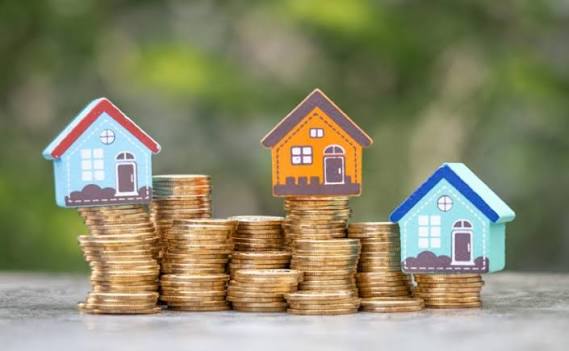
Paying token money is often the first real step toward owning your new home. It feels routine, like a small amount, a quick handshake, and a simple promise to move forward. Yet, that one moment holds more legal and financial weight than most buyers think.
Once token money has changed hands, you and the seller aren’t really just two people chatting anymore — you’ve effectively become two parties tied to an implied (and often written) agreement. In most cases, after the seller accepts your token, they can’t simply turn around and sell the property to someone else. And on your side, you’re usually expected to complete the purchase within a set timeline; otherwise you may end up losing what you’ve already paid.
This guide covers everything a buyer should understand before you part with token money. What it is, how much is reasonable, which documents to check, what errors to dodge, and which questions to ask. At Greywood Homes, we’d rather you spend fifteen extra minutes reading this than fifteen months stuck in a property dispute.
Token money (also called a token advance, booking amount, or earnest money in some regions) is a small upfront payment a buyer makes to a seller to signal serious intent to purchase a property. It is distinct from:
The down payment — the larger upfront sum paid at the time of registration or agreement execution
Earnest Money Deposit (EMD) — sometimes used interchangeably, though EMD is more common in auction or tender-based property sales
The full sale consideration — the total agreed price of the property
Token money is not legally mandatory under Indian property law, and there’s no fixed percentage that a statute lays out, like in a neat schedule or anything. Usually in practice, it falls anywhere around 1% to 5% of the overall property value, but it’s not something set in stone; it’s mostly negotiable. A lot depends on local custom, the seller’s expectations, and what the market is doing in your city.
Once the token is accepted, the token amount kind of “locks” the property for you—so the seller is generally expected to stop entertaining other buyers. buyers. Offers. That’s also why both sellers and buyers tend to treat it as more than a small formality and why disagreements about token money are among the more common property-related disputes you’ll see across India.
In many transactions, sellers will only begin sharing full property documents, encumbrance history, and loan-related paperwork after token money is received. This makes it even more important to do your preliminary due diligence beforehand and to structure the token agreement so you aren't locked in before verification is complete.
Token money usually changes hands at one of two points:
At the time of initial agreement on price—once both parties agree on the cost and broad terms, the buyer pays the token to formalize the intent to proceed.
At the time the seller accepts a specific offer—if there were multiple interested buyers, the seller accepts one offer, and the token is paid to seal that acceptance.
This is the single most important check of the entire process, and it deserves the most time and attention.
Ask for the original (not photocopied) title deed and confirm the name on it matches the person asking for token money. If the seller is selling on behalf of someone else, insist on seeing a registered Power of Attorney (PoA)—an unregistered or expired PoA is a serious red flag.
Trace the chain of title back at least 12–30 years, depending on your state's practice. This helps rule out disputed inheritances, benami transactions, or breaks in the ownership chain that could surface later.
Check for co-ownership. If the property is jointly owned—commonly inherited or ancestral property—every single co-owner must consent in writing. A token paid to only one of several legal heirs offers you no real protection.
Verify mutation records (also called Dakhil-Kharij in some states) to confirm the property has been correctly transferred and updated in revenue records after the last sale or inheritance.
Cross-check the property tax receipts in the current owner's name — a mismatch here is often the first sign of an incomplete or informal transfer.
An Encumbrance Certificate (EC), available from the sub-registrar's office (or online in several states), shows every registered transaction against the property over a chosen period—sales, mortgages, gifts, and legal charges.
Request an EC covering at least the last 13–15 years, and ideally longer for older properties.
A "nil encumbrance" certificate means the property is not currently mortgaged or pledged. If the EC shows an existing home loan or mortgage, ask the seller to show proof that it has been (or will be) cleared before you pay anything—an outstanding loan on the property can complicate or even block your purchase.
Don't rely solely on the seller's word here. Pull the EC yourself or have your lawyer do it—it typically costs very little and can save you from a costly mistake.
For apartments, gated communities, and any project still under construction, regulatory compliance matters just as much as the title.
RERA registration: Every real estate endeavour that’s above the threshold size in most states has to be registered with that state’s Real Estate Regulatory Authority. So just go ahead, look up the project on your own state’s RERA portal, and verify (like really check) that the promoter’s name, registration number, and the projected completion schedule line up with what you were told.
Sanctioned building plan: Please ask for the approved layout and building plan directly from the local development authority or the municipal corporation—whatever covers your area. If the construction later wanders, like deviates from that sanctioned plan, it can trigger demolition orders or even regularization penalties down the road.
Occupancy Certificate (OC) / Completion Certificate (CC): For ready-to-move properties, these confirm the building was constructed as per approved plans and is legally fit for occupation. Never treat a project as "ready" without one.
Land use and zoning: Confirm the land is zoned for residential use in the local master plan. Agricultural or industrial land that hasn't been formally converted for residential use is a common source of long-term legal trouble.
Local land records terminology: Depending on your state, you should ask for the relevant ownership record—Khata/Khatha certificate (Karnataka), Khatian (West Bengal, Bihar), 7/12 extract (Maharashtra), Patta (Tamil Nadu), or Jamabandi (Punjab, Haryana, or Rajasthan)—to double-check that the property is properly logged in the local revenue systems. This matters because it helps confirm the record is actually there and matches what you expect.
Never hand over token money on a verbal promise, however trustworthy the seller seems or however good the broker's reputation is. Insist on a written Memorandum of Understanding (MOU), Token Receipt, or Agreement to Sell that clearly records:
The exact amount paid, the date, and the mode of payment
Full names, addresses, and identification details of buyer and seller
Complete property description (address, survey/plot number, area, and boundaries)
The total agreed sale price and the payment schedule for the remaining amount
A clear deadline by which the full agreement or registration must be completed
Refund conditions and timelines (see below)
What happens if either party defaults or withdraws
Signatures of both parties, ideally with a witness
Whether the token money is refundable or non-refundable really depends on what’s put into your agreement, not on what you “feel” should happen. There’s usually no automatic legal default either way, so if the agreement is quiet, that silence can end up working against the buyer.
Also, try to see what you might stand to lose in practical terms. A lot of agreements say that if you withdraw without valid cause, the token amount is forfeited to the seller, as compensation for lost time and lost opportunity, etc. Read that clause carefully but don’t rush it, and if it seems too one-sided, then negotiate it or ask for it to be rewritten.
Make sure your agreement explicitly states you will get a full refund if:
The seller's title turns out to be defective, disputed, or incomplete
The bank rejects your home loan application despite genuine effort on your part
The property fails a legal, technical, or structural inspection
The seller fails to deliver documents, approvals, or possession as promised
The seller backs out or sells to someone else after accepting your token
Always pay by check, demand draft, NEFT/RTGS, or another fully traceable banking channel.
Cash payments leave no audit trail and are notoriously difficult to prove in a dispute — it becomes your word against the seller's.
A traceable payment, backed by a bank statement and a signed receipt, is by far your strongest evidence that the transaction took place, for what amount, and on what date.
Under Indian income tax law, cash transactions above certain thresholds in property deals can also attract penalties for both parties — another good reason to stay within the banking system.
If the seller insists on cash specifically to avoid a paper trail, treat it as a warning sign, not a convenience.
A neutral third party present when the token money changes hands—a family member, friend, or your property advisor—adds a valuable extra layer of protection.
It reduces the chance of later disagreements about whether payment was made, in what amount, and under what conditions. Have the witness sign the receipt or MOU as well.
If you're financing the purchase, don't treat the token payment as a standalone event.
Get at least an in-principle home loan approval before committing to a token payment, so you know your borrowing capacity is realistic.
Align the agreement's timeline with the bank's property valuation, legal verification, and loan disbursement schedule — these can take anywhere from a few days to several weeks.
Explicitly link the refund clause to loan rejection so a bank's technical or legal objection to the property (which is fairly common and not always your fault) doesn't cost you your token money.
Remember that many sellers will only release full property documents for the bank's due diligence after receiving the token—plan your timelines accordingly and don't let this become a bottleneck.
This is worth calling out as a check in its own right. A qualified property lawyer can review the title chain, the MOU, and the sale agreement for a relatively small fee compared to the size of the transaction — and can flag issues that aren't obvious to a first-time buyer. Don't skip this step to save a few thousand rupees on a purchase worth lakhs or crores.
For resale properties, ask around the neighbourhood, check if there have been any disputes involving the seller, and confirm their identity through government ID proof.
For under-construction projects, look up the builder's past project delivery record, RERA complaint history, and online reviews. A builder with a history of delays or litigation is a risk worth pricing in before you commit even a token amount.
None of these automatically mean fraud—but each one is a reason to slow down, verify further, and involve a professional before you pay.
Be extra cautious if you notice any of the following during the token money discussion:
The seller pressures you to pay immediately, "before someone else books it," without giving you time to verify documents
The seller insists on cash-only payment
Property documents are described as "with the lawyer" or "will be shared after token" with no clear timeline
The sale price seems significantly below market rate for the area
The seller is unwilling to put refund terms in writing
There's no RERA registration for a project that should legally have one
Multiple names or unclear ownership history that the seller is reluctant to explain
No. No law requires a buyer to pay token money, and no fixed percentage is prescribed. It is a customary practice used to formalise intent, and its terms are entirely a matter of agreement between buyer and seller.
Most transactions fall in the 1–5% range of the total property value, but this varies by city, property type, and negotiation. There's no obligation to pay more than what feels reasonable and is clearly documented.
Generally, no—once token money is accepted, the seller is expected to honor the commitment and stop entertaining other offers for the agreed period. If they do sell elsewhere, you may be entitled to a refund and, depending on your agreement, compensation.
This depends entirely on your agreement. In most cases, if you withdraw without a valid, pre-agreed reason (like loan rejection or title defects), the seller is entitled to retain the token amount as compensation.
Ideally, involve a lawyer at the token stage itself—reviewing the MOU and doing a preliminary title check before you pay is far more useful than reviewing everything only at the final registration stage, by which point you've already committed funds and emotional investment.
No, a token receipt or even an MOU only sort of records that a specific amount has been paid, and it also spells out the basic terms plus the refund conditions, kind of generally.
But the sale agreement, or the agreement to sell, is a more detailed and usually stamped legal paper that gets executed later. It covers the full price, the possession date, and the conditions of transfer properly. So yes, they do serve different purposes, and honestly one doesn’t just replace the other, even if they might feel similar at first.
No. Token money only secures your intent to buy and (typically) takes the property off the market. Legal ownership transfers only after the sale deed is executed and registered at the sub-registrar's office, along with payment of applicable stamp duty and registration charges.
Treat this as a serious red flag and do not proceed. A seller unwilling to acknowledge payment in writing gives you no way to prove the transaction happened, which leaves you with no legal recourse if the deal collapses or the seller denies receiving the money.
This is not advisable unless the broker is formally authorised in writing by the seller to collect payments on their behalf. Token money should ideally be paid directly to the seller (or into an escrow arrangement), with the receipt signed by the seller — not just the broker — to avoid disputes over whether the funds were ever passed on.
Token money on its own is generally seen as a sort of advance against the sale consideration, and it is usually put into the final price later on, usually at the time of registration. So it doesn’t typically attract stamp duty in a separate manner.
Still, GST can come into the picture for properties that are not fully constructed, as part of the overall deal, and then the exact treatment depends on where the property stands in the payment stage. It’s better to check the precise position with your lawyer or CA, based on the property type and those payment milestones.
Token money is meant to build trust between buyer and seller — but real trust is backed by paperwork, not assumptions. Before you pay, make sure you've covered:
At Greywood Homes, every property we offer comes with verified titles, complete RERA and approval documentation, and full legal support at every stage — so when you're ready to take that first step, you can do it with complete confidence and zero guesswork.
✅ Title and ownership verification, including co-owners and PoA validity
✅ A clean Encumbrance Certificate covering at least 13–15 years
✅ RERA registration, approvals, OC/CC, and correct land use
✅ A written MOU or receipt with complete transaction details
✅ Clear, explicit refund conditions covering title defects and loan rejection
✅ Payment only through traceable banking channels — never cash
✅ A witness present at the time of payment
✅ Timelines synced with your home loan approval process
✅ A property lawyer's review before you commit funds
✅ Basic background checks on the seller or builder's track record
Greywood Homes is a property expert sharing insights about the real estate market.
Confused between location vs property size? Discover how property location, property value appreciat...
Explore YEIDA Plot Scheme 2026 with full details on plot sizes, pricing, eligibility, and applicatio...
Sell property online in India with ease. Learn how to create high-converting listings, choose the ri...